
Rust along bottom panel
On older doors you might see rust blooming along the bottom panel where water sits after rain. Most of the housing across this service area went up between 1951 and 2012, with the bulk of it dating to the 1980s and 90s.
Johns Creek, GA
Dented or cracked garage door panels are common on Johns Creek homes built in the 1980s-2000s. We match panels to older doors and explain when a full door makes more sense.
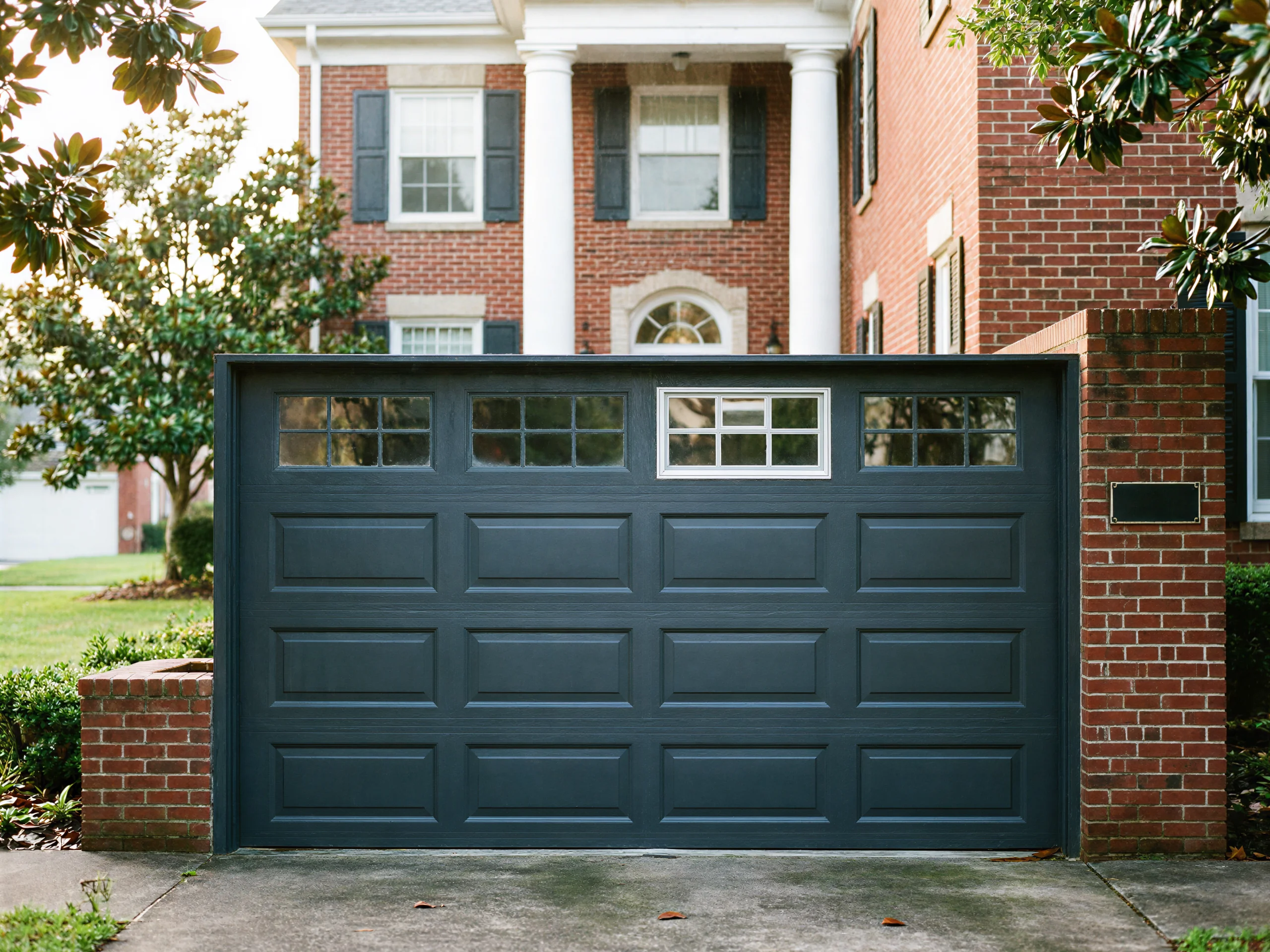
Warning signs
A dented panel, a crack along the seam, or a section that's bowed out where a car bumper or a basketball hit it. Sometimes it's not impact at all - the panel has just delaminated, with the steel skin separating from the foam core, which shows up as a bubbled or wavy section that wasn't there a year ago.
On older doors you might see rust blooming along the bottom panel where water sits after rain. Most of the housing across this service area went up between 1951 and 2012, with the bulk of it dating to the 1980s and 90s.
That matters here because a lot of those original doors are still in service, and the panel profiles and hardware spacing from that era don't always match what's sold today. A single cracked panel on a 1988 door isn't always a simple swap - sometimes the whole section style has been discontinued and we're matching as close as we can get rather than exact.
If only one panel is damaged and the rest of the door is sound - no spring fatigue, no track damage, no warping across the other sections - panel replacement is usually the right call instead of a full door. If the door is already fighting you on multiple fronts, that changes the math, which we get into below.
Our process
We pull the model and section number off the door first, which on older doors usually means a sticker inside the top section or stamped into the end stile.
From there we order a matching panel if one exists, or source the closest match in gauge and insulation if the exact profile is gone. Steel gauge and the type of hinge pattern both have to line up, or the new panel will rack under stress even if it looks right.
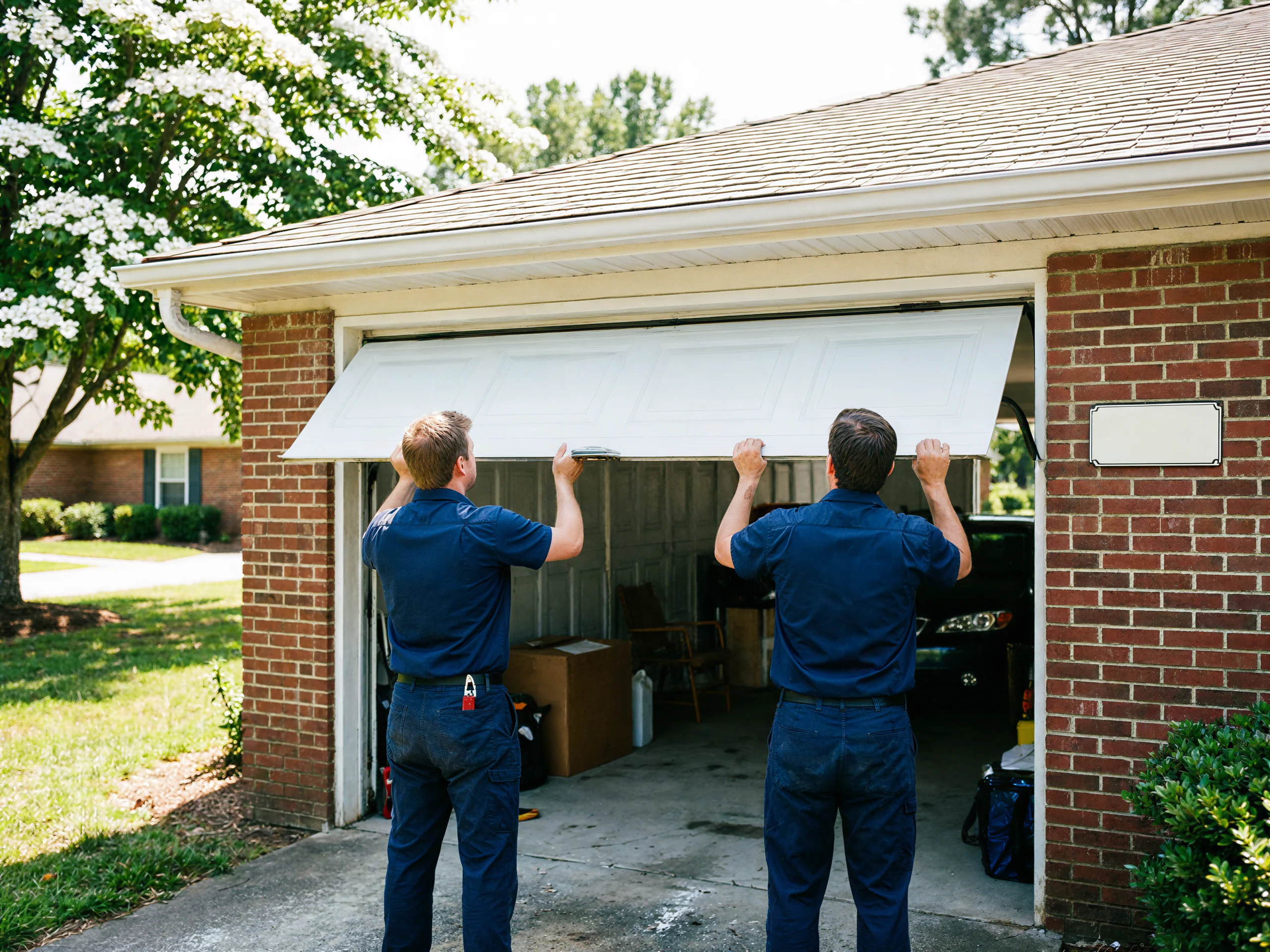
Installation means pulling the hinges off the damaged section, lifting it out without disturbing the track alignment on either side, and fitting the replacement before re-hanging the hinges and rollers. On insulated doors we check the foam core bond on the panels next to the new one too, since a hard impact often stresses the neighboring section even when it doesn't show visible damage yet.
One limitation worth saying plainly: if your door is an uncommon color or an older composite-wood-look finish, the new panel may not match until it weathers for a season, and on some discontinued lines we can't get an exact color match at all. We'll tell you that before we order anything, not after.
Pricing
Panel replacement cost depends on three things: whether the panel is still manufactured, whether it's insulated or single-layer steel, and how many sections are damaged.
A single non-insulated panel on a common door is the cheapest version of this job. An insulated panel on a discontinued line, where we're sourcing a close match instead of an exact one, costs more because of the search and sometimes the freight.
We don't have a flat number to post here since it swings with the door model, but we'll give you a firm price before any work starts, not an estimate that moves once we're on site.
If two or more panels on the same door are cracked or delaminated, or the door is already original from the 80s or 90s with worn rollers and a tired spring, we'll tell you straight when a full door replacement costs about the same as patching an old one panel at a time - because in that case it usually does.
Local causes
The service area sits in a cold-moderate climate band, which means real temperature swings across the year rather than one steady condition. Steel panels expand and contract with that, and on doors from the 80s and 90s - a big share of what's still installed across these 23 named areas - the foam-to-steel bond in insulated panels has had decades of that cycling to work loose. That's the delamination you see as a wavy or bubbled section, and it's not something that happens overnight.
Impact damage is the other common cause, and it's mechanical, not seasonal - a trailer hitch backed in wrong, a basketball off the rim, a bike leaned against the bottom section. On the original doors still hanging in older neighborhoods, a dent that would be cosmetic on a newer door can crack an aging, more brittle panel outright.
We work across the broader metro area including homes near Berkeley Lake, Peachtree Corners, and Sugar Hill, and the same housing-age pattern holds in most of those pockets - doors from the 80s and 90s original to the house, now showing their age one panel at a time.
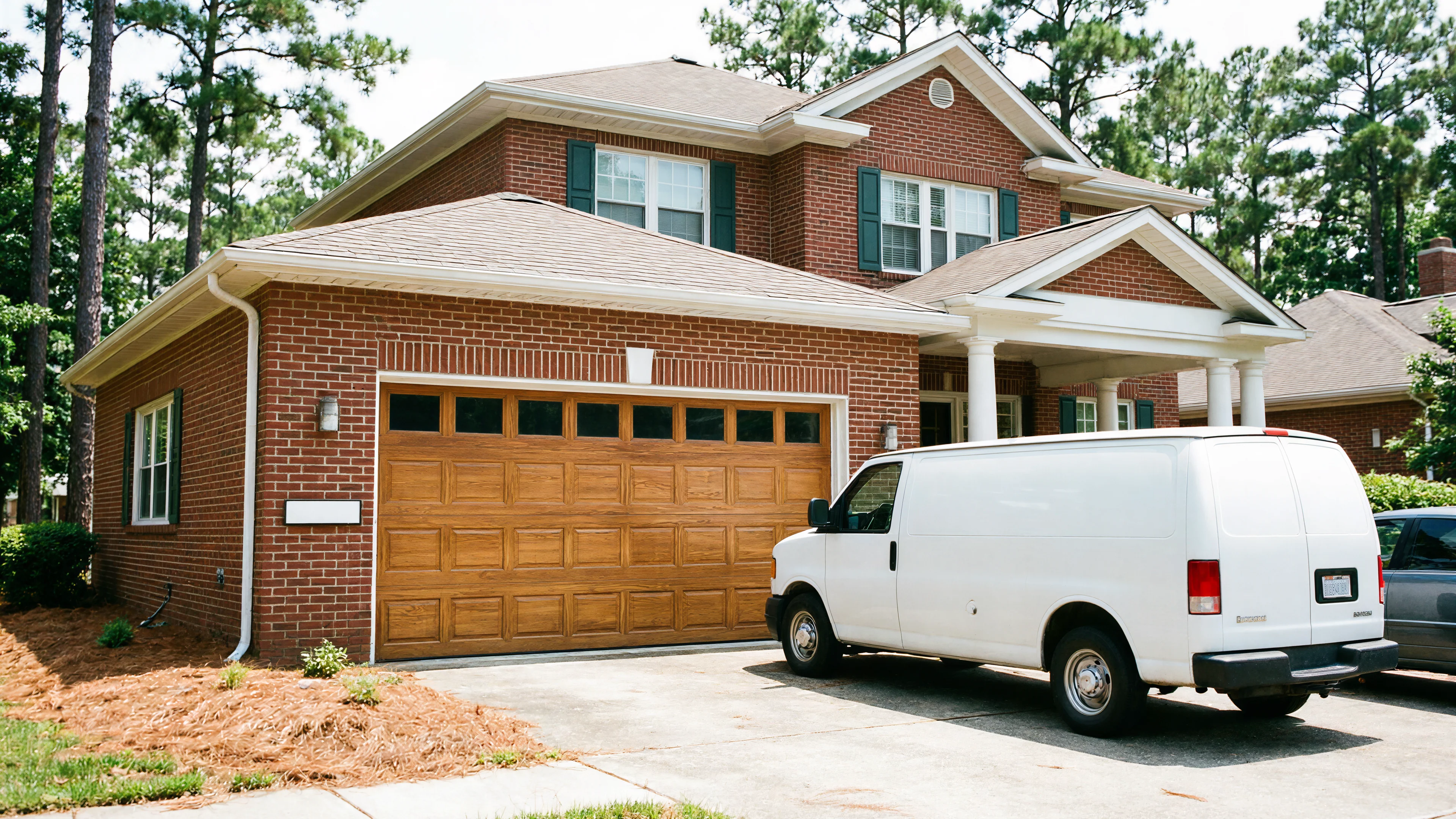
Questions
Often yes, but not always exact. A lot of doors from that era are still common enough that we can find a matching section. On discontinued lines we source the closest match in gauge and insulation, and we'll show you the match before ordering so there are no surprises.
One panel is almost always cheaper up front. But if the door is already original and other sections, rollers, or the spring are worn, replacing one panel at a time can end up costing close to a full door over time. We'll tell you which situation you're in before we quote.
That's usually delamination - the foam core separating from the steel skin after years of temperature swings. It's common on older insulated doors in this climate band and isn't caused by a single event, just time.
Explore more
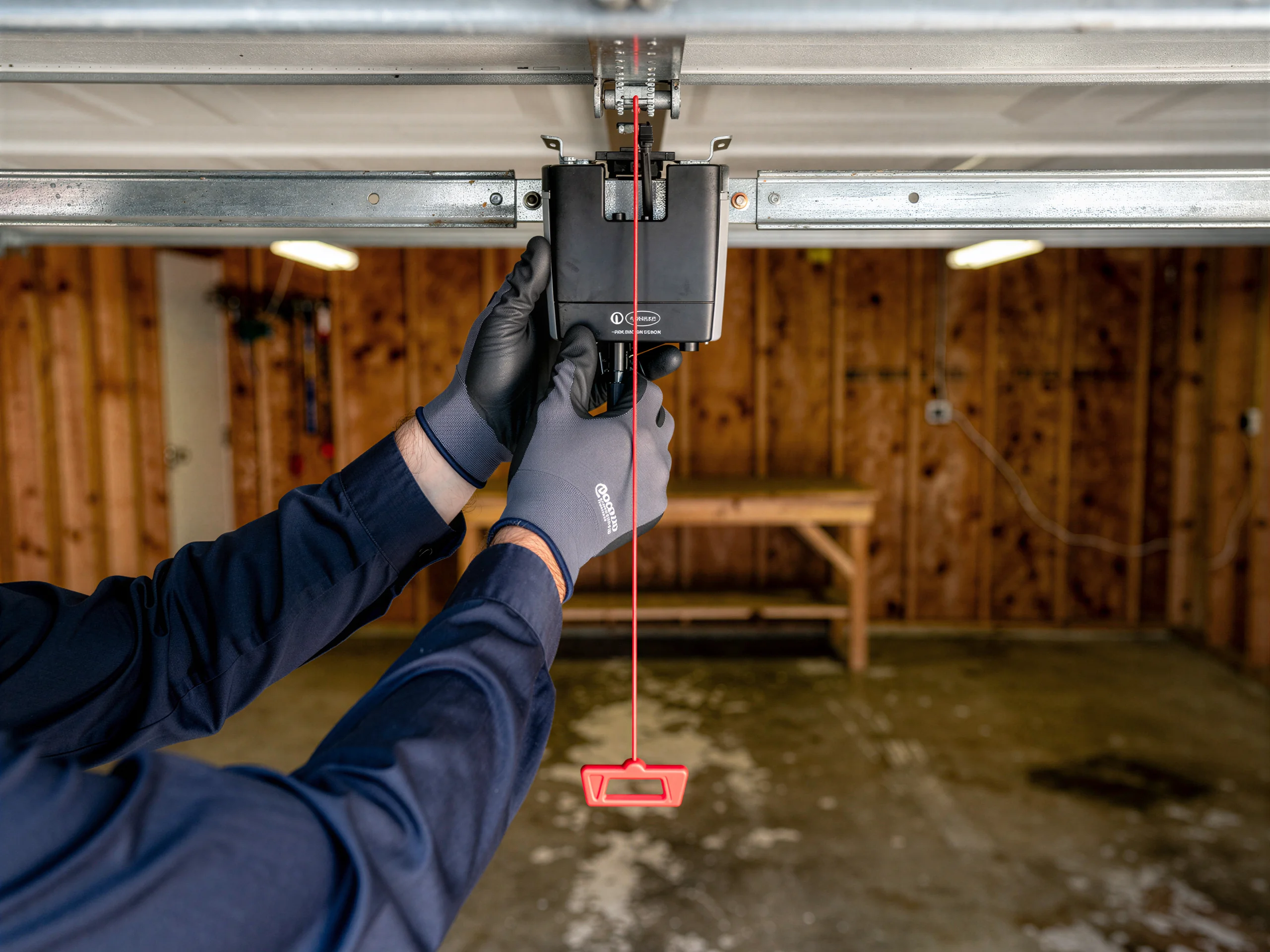
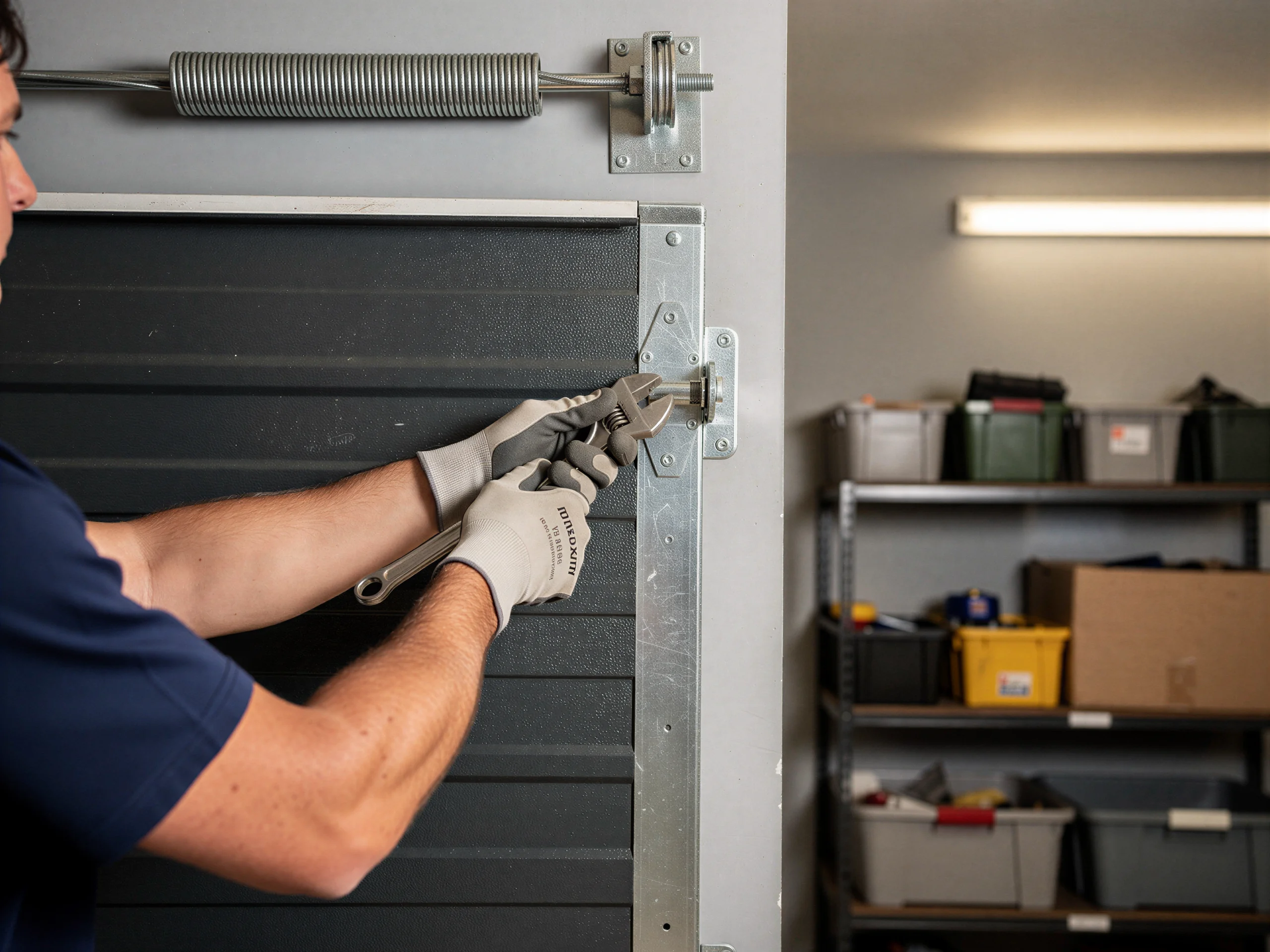
Ready when you are
Johns Creek Garage Door Pros repairs and installs garage doors, springs and openers in Johns Creek, GA and the surrounding area.