
Blog
What Weather Seals and Draughts Really Mean in Johns Creek
Johns Creek homes built mostly in the 1980s and 90s see worn weather seals and draughts show up fast once cold fronts hit. Here's what to check first.
What Most People Get Wrong
Most people here assume a draught under the garage door means the weather seal is cracked and needs a quick swap. Sometimes that's true. But a lot of the houses in this part of Johns Creek went up in the 1980s and 90s, and the jambs themselves have settled a little over thirty-plus years. The seal isn't failing on its own - it's trying to close a gap that's gotten wider as the frame shifted. Swap the rubber and you'll feel better for a season, then the draught comes back because the real problem is the opening, not the strip.
The other mistake is treating the bottom seal and the side/top weatherstrip as the same job. They wear differently. The bottom astragal takes the brunt of ground moisture and gets driven over, dragged, and UV-baked if the door faces west. The side seals age more from temperature swings than physical wear. On a door built into a frame from the 1980s stock, you'll often find the bottom seal is the third or fourth replacement while the side strip is still original - because nobody ever looked at it.
We don't push a full weatherstrip kit on every call. If the gap is uneven top to bottom, that's a track or hinge problem first. Fix the door's travel before you fix the seal, or you're sealing a moving target.
What the Weather Here Does to It
Johns Creek sits in a cold-moderate climate band - not the deep freeze of the mountains, not the mild coast. That matters for seals because it means your garage door rubber goes through freeze-thaw cycles rather than steady damp rot. The strip contracts hard on a cold night, then has to flex back out as the day warms. Rubber does that for years without complaint, then one cold snap it doesn't flex back all the way, and you've got a permanent gap at one corner.
This is different from what a seal in a warmer climate deals with, where the failure mode is usually UV cracking from sustained heat rather than repeated contraction. Here, the seal is working a wider temperature swing on a daily basis through the winter months, and that's what shortens its life compared to a flatter climate.
It also means the draught problem gets worse before it gets better. A seal that's marginal in October will show you a real gap by January, right when you most want the garage sealed. If you're noticing cold air at the bottom corners now, don't wait for the coldest week to deal with it - that's when parts take longest to source and the job is least pleasant to do standing in a cold garage.
What to Check
Start at the bottom seal. Close the door and look at it from outside at night with the garage light on - if you see slivers of light at the corners or along the middle, that's your draught path. On a door framed in the 1980s-90s stock common around here, check whether the seal is the original style groove-and-bulb astragal or a replacement retrofit; the retrofit kits don't always match the groove width exactly, and a loose fit lets air through even with new rubber.
Next, run a hand along the side jambs where the door meets the frame. Feel for air movement, not just look for gaps - a seal can look fine and still not be compressing because the door isn't tracking square anymore. That's a hinge or roller issue, not a seal issue, and no amount of new weatherstrip fixes it.
Check the top seal last - it's the one people forget, and on an older frame it's often the most settled and least adjustable. If the top gap is wider than a pencil, the track probably needs adjustment before you touch the strip.
One limitation worth saying plainly: we don't do full frame or jamb rebuilds. If the opening itself has shifted enough that no standard seal will close it, that's a carpentry job, and we'll tell you that instead of selling you three seal kits in a row.
What Is Going On
Underneath the draught complaint, the mechanism is simple: a seal is a compressible strip trying to close a gap that changes size with temperature and settling. In a service area with 44,786 owner-occupied houses, a huge share of the garage doors we see are sitting in frames built between 1951 and 2012, with the bulk from the 1980s and 90s. Thirty to forty years of seasonal movement is enough for most frames to have shifted a quarter inch or more from true, and that's more than a stock bottom seal is built to absorb.
Berkeley Lake, four miles off, and Peachtree Corners, five miles out, sit in the same cold-moderate band and see the same pattern - it's not a one-house problem, it's a housing-stock-and-climate problem that shows up wherever that combination lines up. Farther out, places like Sugar Hill or Cumming get similar winters but newer average housing stock, so the seal failures there tend to come later in a door's life rather than mid-life like we see here.
The fix almost always starts with squaring the door's travel, then matching the seal to the actual groove, not the generic big-box strip. Skip the first step and you're replacing the same seal again in two winters.
Questions
Common questions
How often should I replace the bottom seal on my garage door?
There's no fixed interval we can quote without seeing the door, but on the 1980s-90s stock common around Johns Creek, we typically see bottom seals needing replacement every several years because of the freeze-thaw cycling here. If you're feeling a draught at the corners now, that's the signal to check it, not a calendar date.
Can I fix a draughty door myself?
Replacing a bottom astragal is a reasonable DIY job if the door is tracking square. If the gap is uneven or the door doesn't sit flush all around, that points to a hinge, roller, or frame issue, and sealing over that just hides the real problem until the next cold front.
Why does my garage door draught only show up in winter?
Rubber seals contract in cold and expand back as temperatures rise. In our cold-moderate climate band, that daily swing through winter is what pushes a marginal seal from barely-holding to visibly gapped. The seal was likely already worn - winter just makes it obvious.
Recommendation
You Might Also Like
More garage door guides for Johns Creek homeowners.
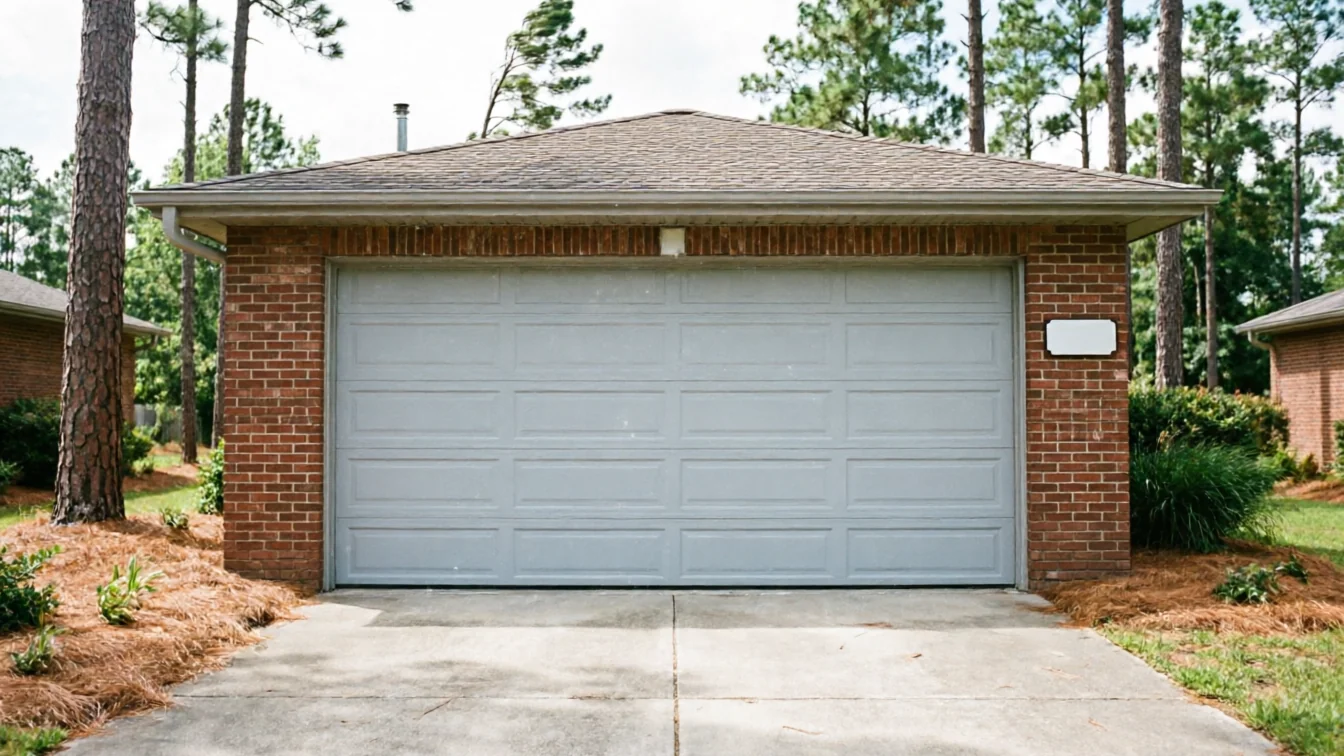
When the Power Cuts Out on a Johns Creek Garage Door
Johns Creek homes built mostly in the 1980s-90s have openers that react badly to cold snaps and outages.
Read guide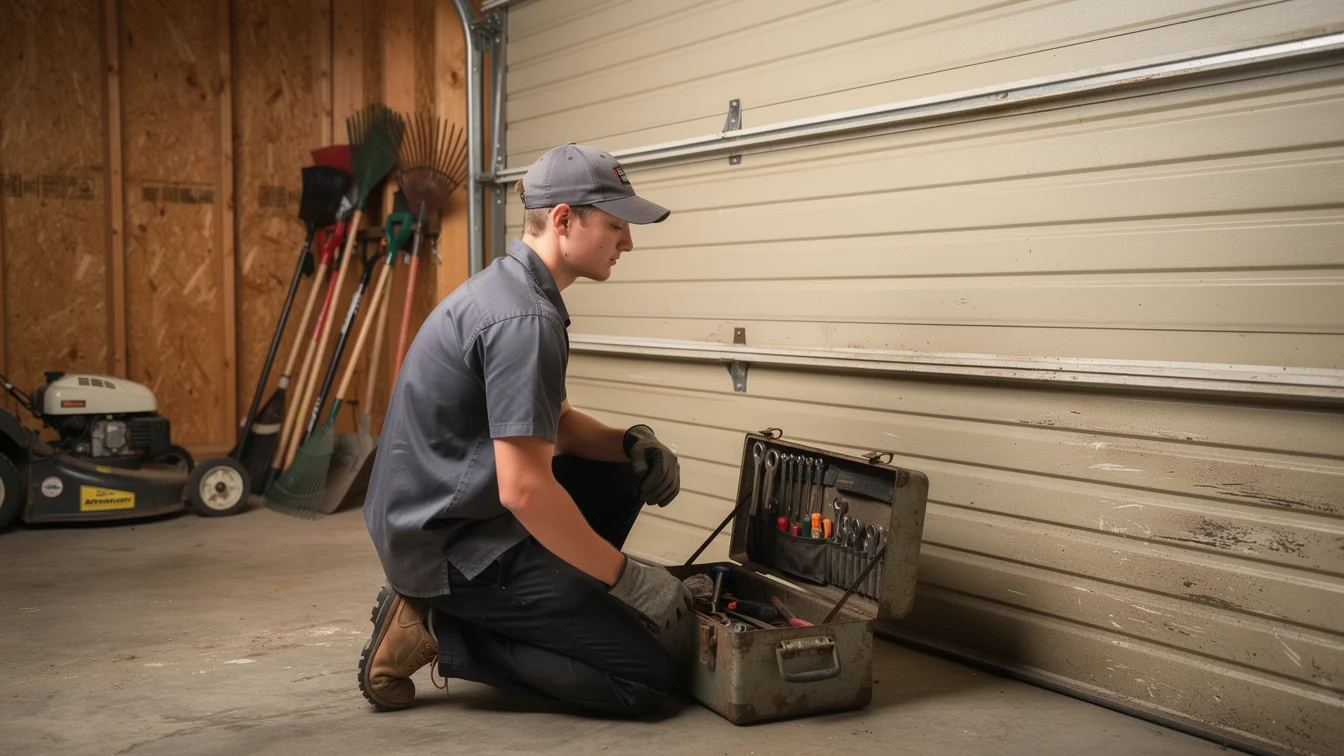
Why a Door Goes Off Track Here
Johns Creek homes built mostly 1951-2012 face track misalignment from cold-moderate freeze-thaw cycles.
Read guide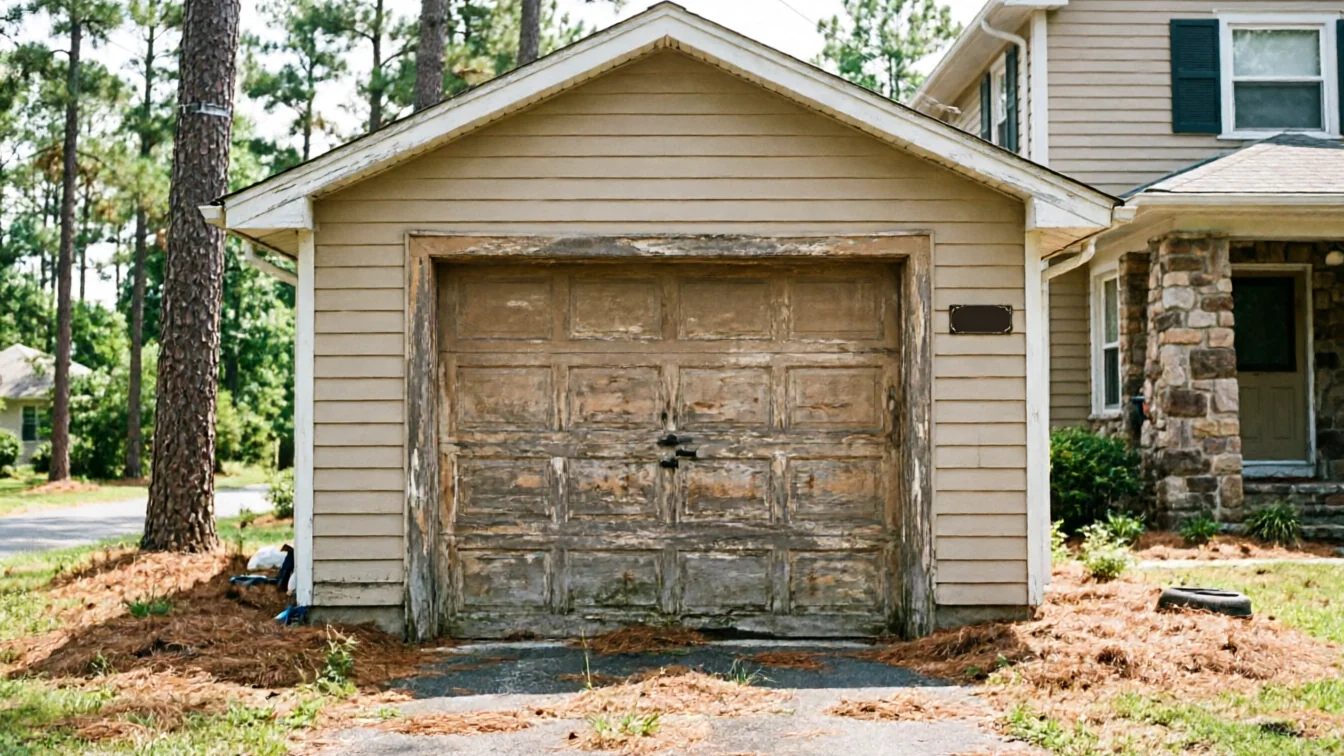
When a Spring Goes in Cold Weather Here
Why Johns Creek's 1980s-90s housing stock and cold snaps make torsion springs snap without warning, and what to check before you call for a repair.
Read guideReady when you are
Need a garage door sorted in Johns Creek?
Johns Creek Garage Door Pros repairs and installs garage doors, springs and openers in Johns Creek, GA and the surrounding area.