Distance adds real time
That drive adds real time to the job compared to the calls we take closer to home, and we'd rather tell you that up front than let you find out when you're standing in the driveway.
Holly Springs, Johns Creek
Holly Springs homes mostly went up around 2007, newer than the rest of the service area. We cover the newer-stock faults from Johns Creek, 19 miles out.
Local causes
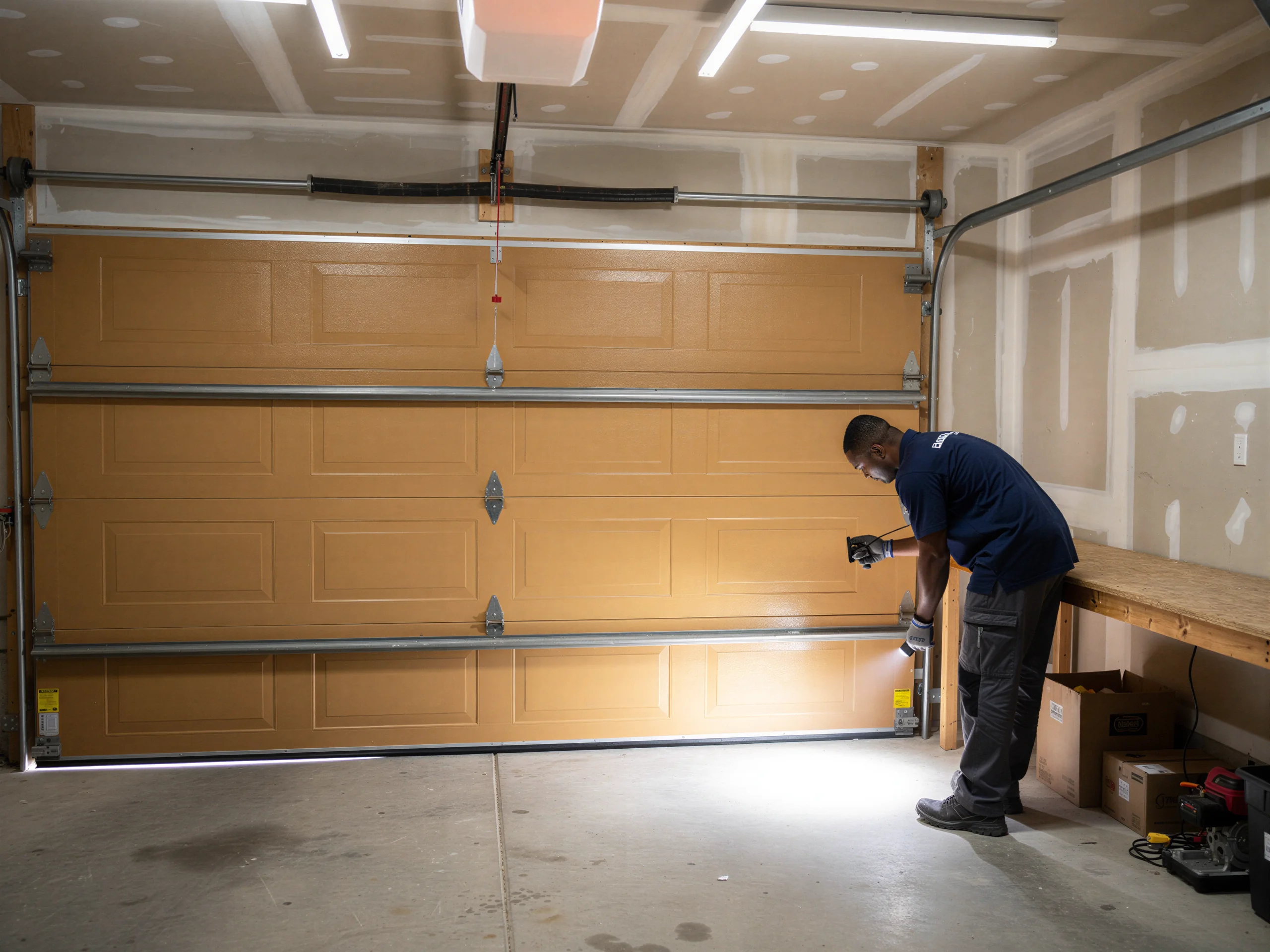
Holly Springs is a smaller slice of the map we cover, about 6,189 households, which means we're not rolling trucks there every day the way we do in the denser parts of the territory closer to Johns Creek. When we do get called, the failures tend to look alike, because the housing stock looks alike.
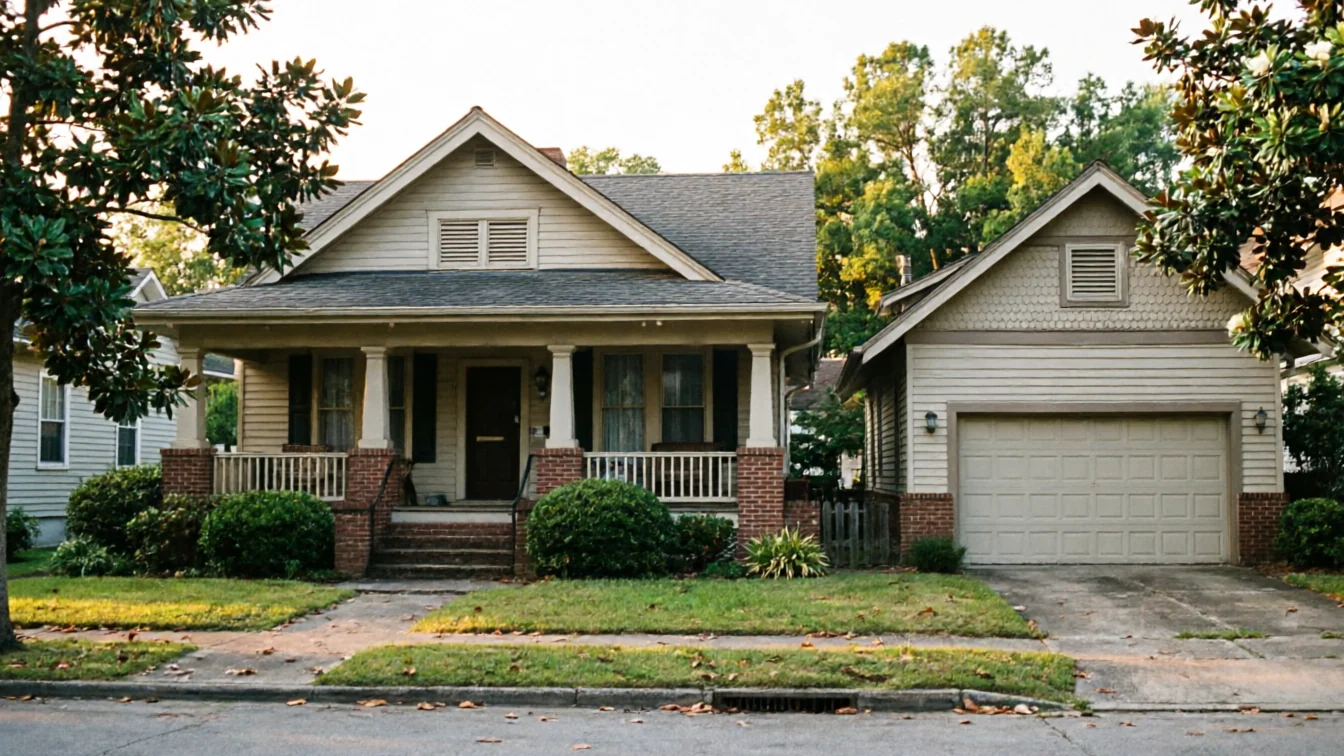
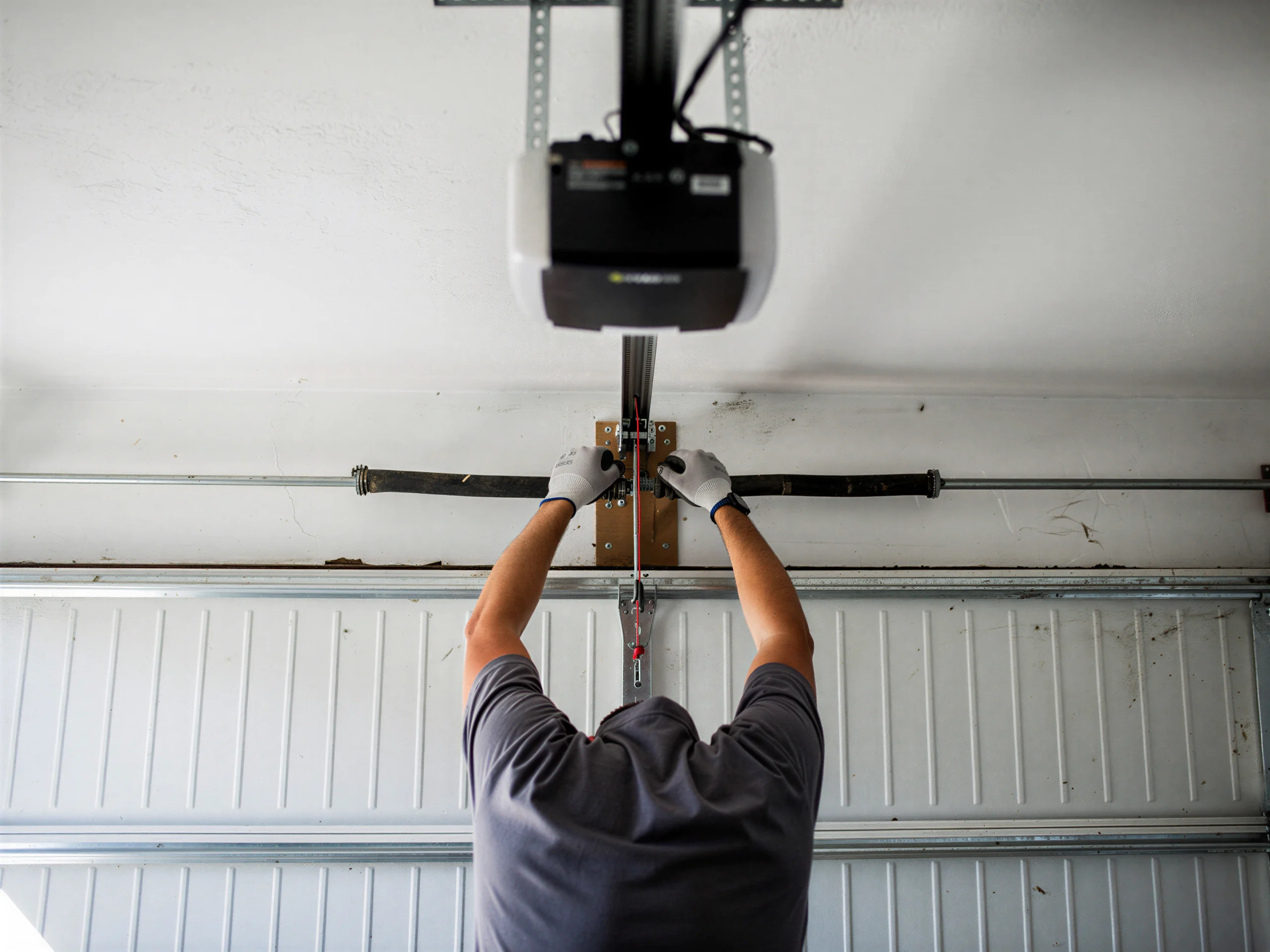
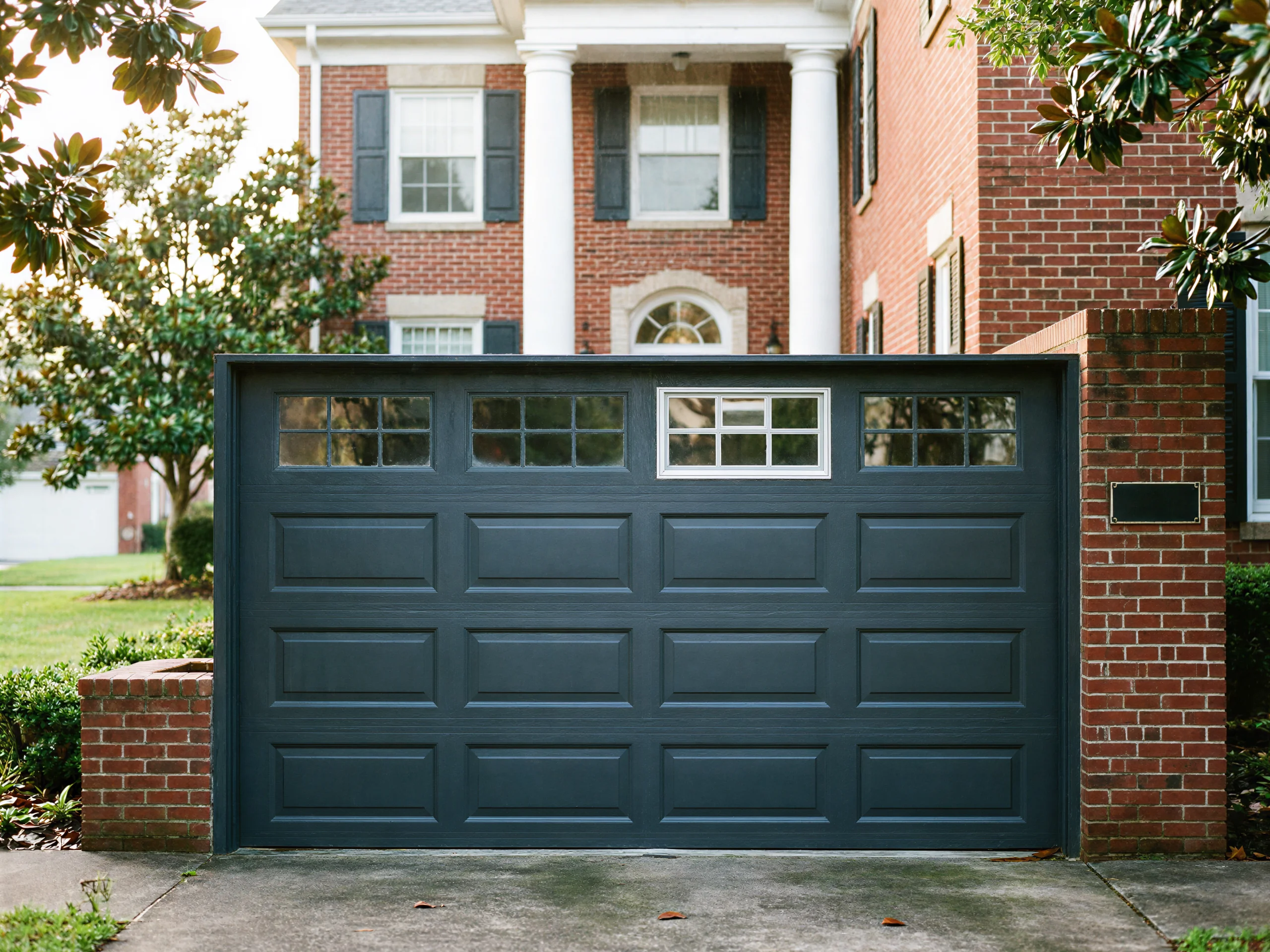
Across the wider service area the typical house went up somewhere between 1951 and 2012, with a lot of that building concentrated in the 1980s and 90s. Holly Springs skews much newer - the median build year here lands around 2007. That twenty-year gap matters for the door itself. You're not dealing with an original one-piece door on side-mounted hardware; you're dealing with a factory steel sectional door on standard torsion springs, now pushing fifteen to eighteen years old. At that age the spring is nearing the end of its cycle count, the nylon rollers have gone from smooth to notchy, and the opener's circuit board - a 2000s or early-2010s unit - starts throwing intermittent faults before it dies outright. We also work a cold-moderate climate zone here, so a stiff morning tightens up old grease and makes a tired spring complain before it actually breaks.
Household income in Holly Springs runs noticeably higher than the service-area median, which tends to show up as insulated steel doors and full-view glass panels rather than the bare single-layer doors we see elsewhere.
Downtime
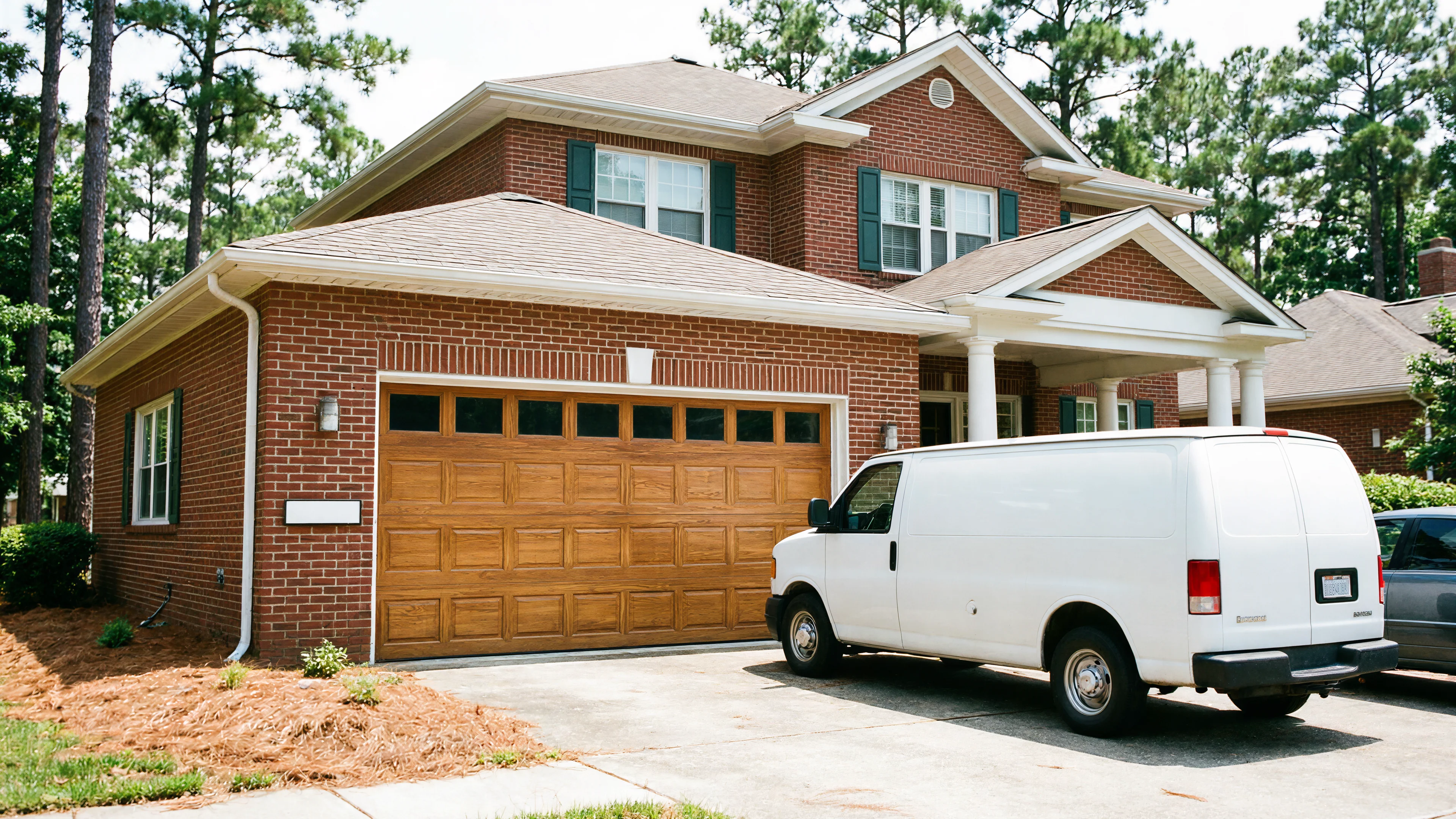
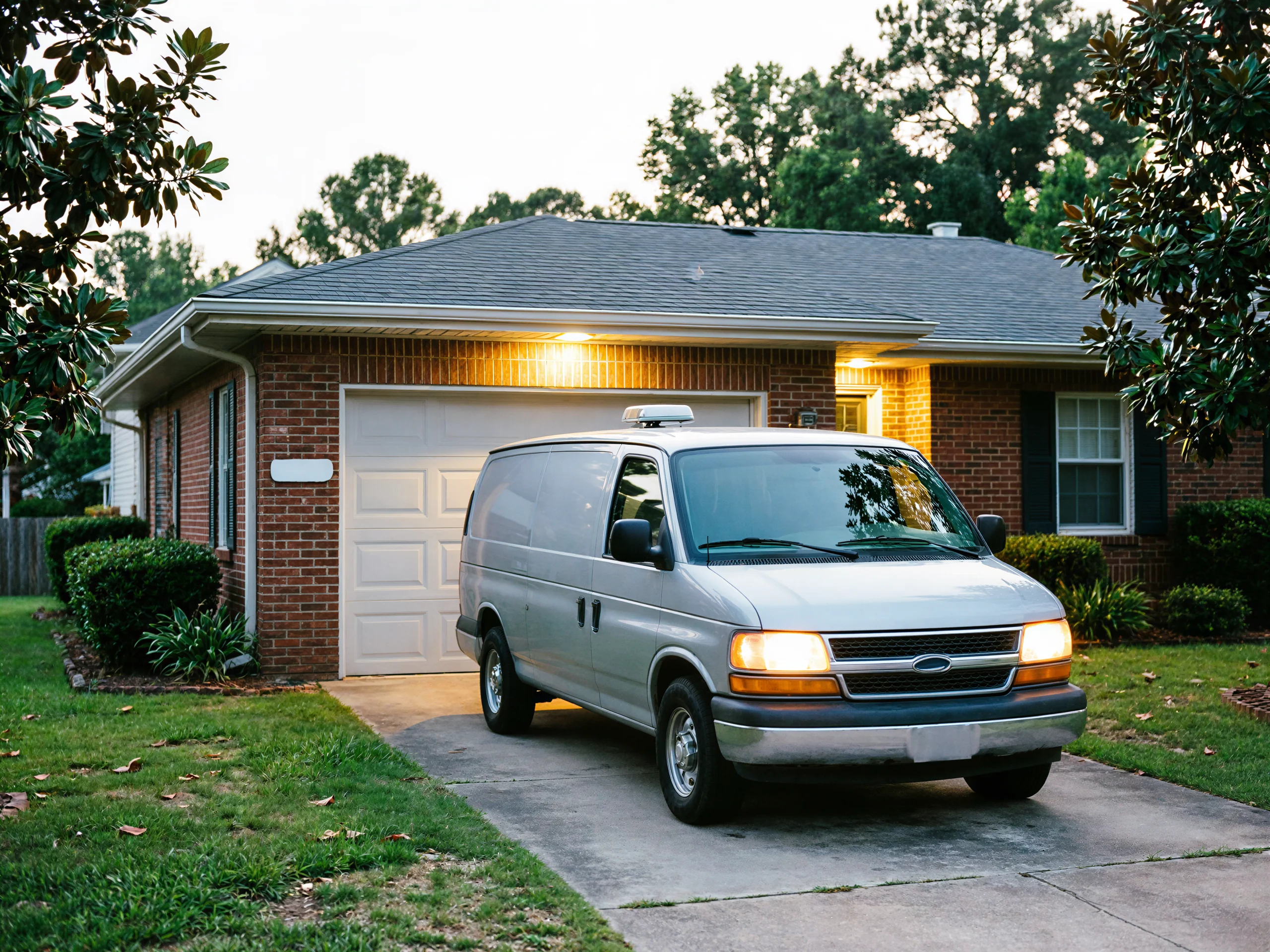
Be straight about this one: Holly Springs sits about 19 miles from our Johns Creek base, so there's no branch around the corner.
That drive adds real time to the job compared to the calls we take closer to home, and we'd rather tell you that up front than let you find out when you're standing in the driveway.
What that means practically is scheduling matters more here. A dead spring on a two-car door with nobody able to lift it isn't something we can turn around as fast as a call ten minutes from the shop.
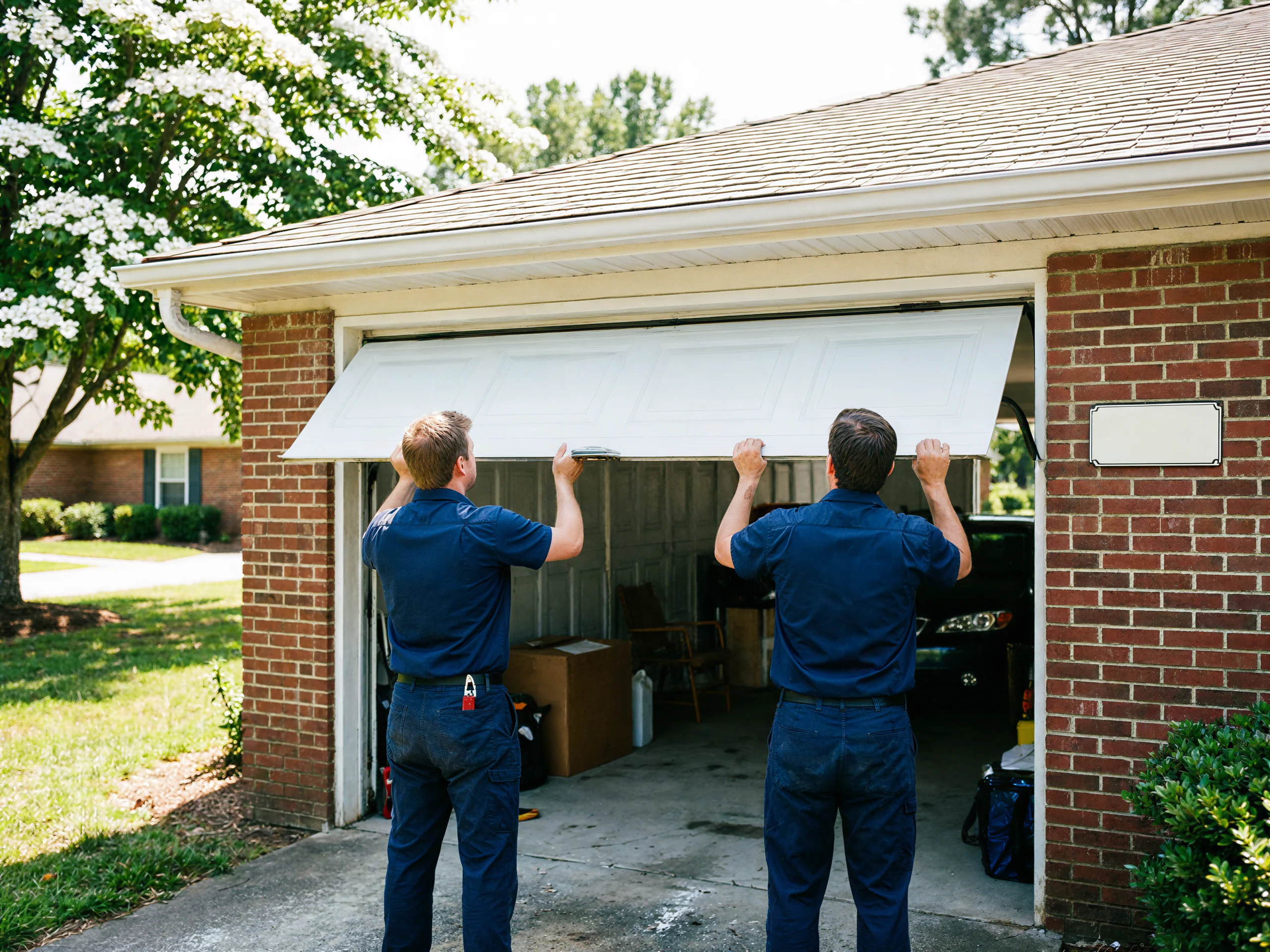
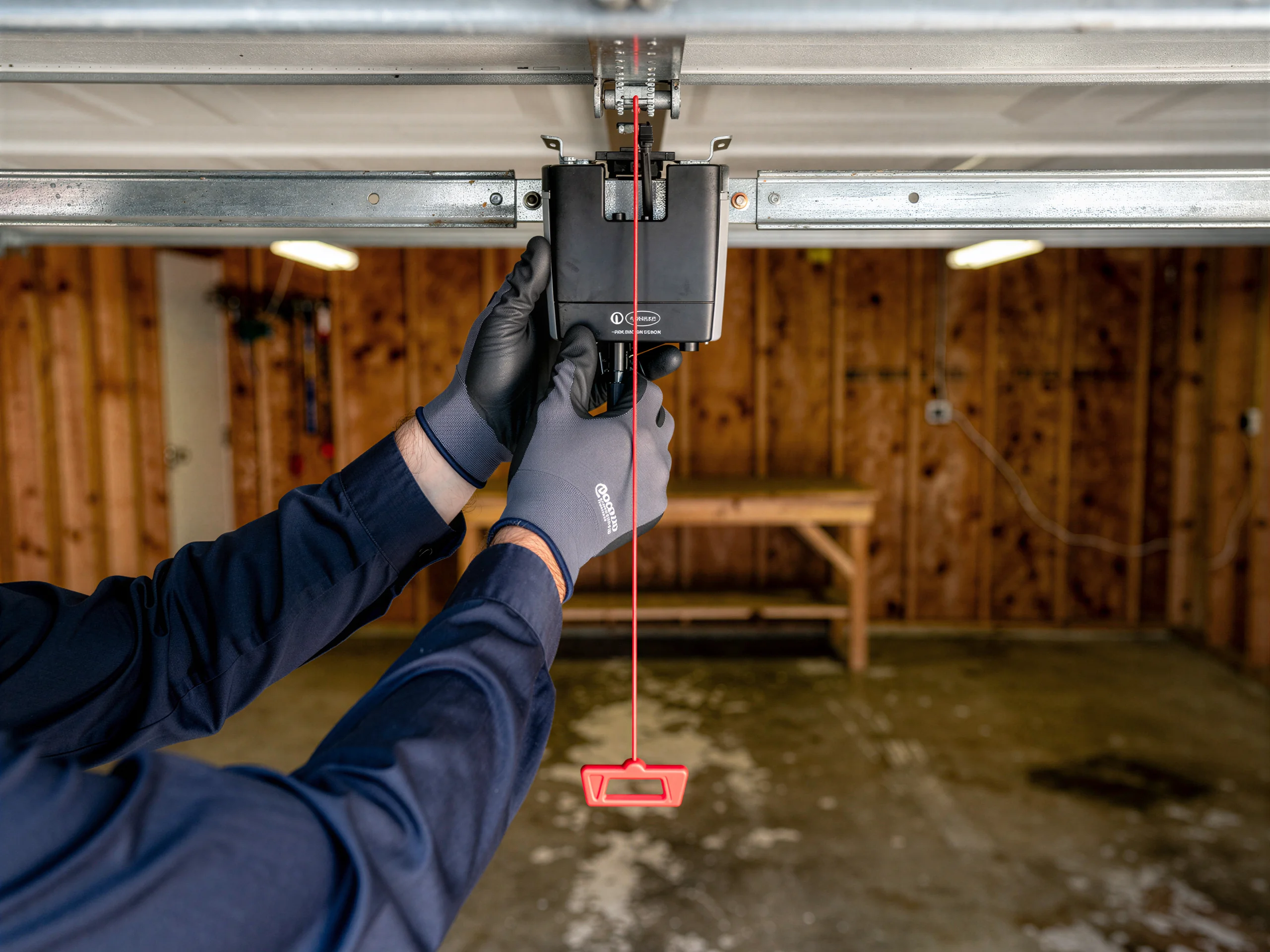
We stage the common parts for newer-build doors - the torsion springs, the roller sets, the opener boards that fail on that 2000s-era hardware - before we head out, specifically so the trip isn't wasted on a part we didn't bring. If something nonstandard turns up once we're on site, that's the one scenario where a second trip is honest rather than a shortcut.
On the truck
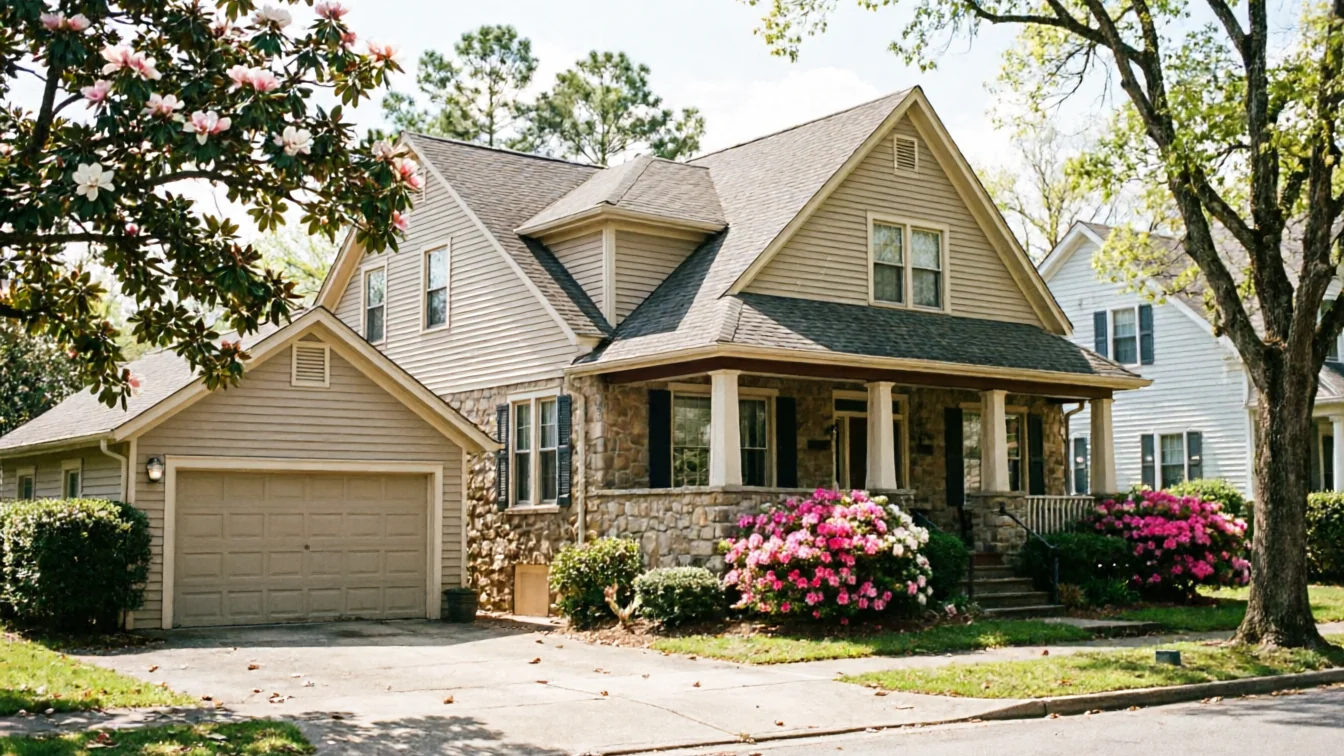
For a town built mostly in the mid-2000s, the parts list skews toward what actually fails on that generation of door: torsion springs sized for a standard 7 or 8-foot steel sectional, ball-bearing and nylon rollers to replace the originals once they're grooved out, and the sensor and logic-board assemblies that match openers from that build era rather than the older chain-drive units you'd find on a house from the 1980s.
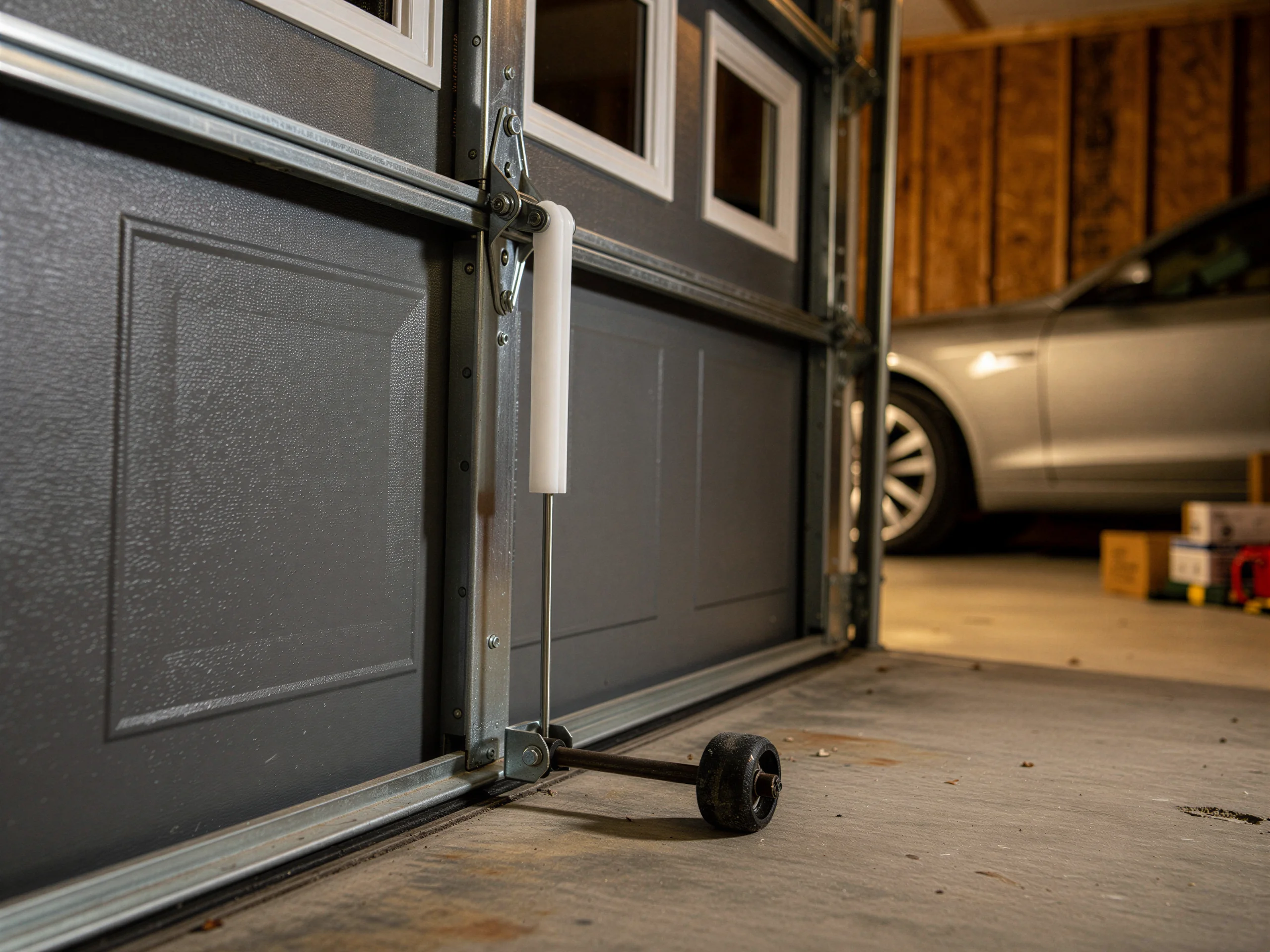
We also carry cable and standard hinge stock, since a frayed lift cable doesn't care what year the house was built. What we don't carry for every call is a full custom panel - if a Holly Springs door has a higher-end insulated or full-view glass section that got dented, that's often a special-order part, and we'll tell you that on the spot rather than pretend we can swap it off the truck.
DIY or pro
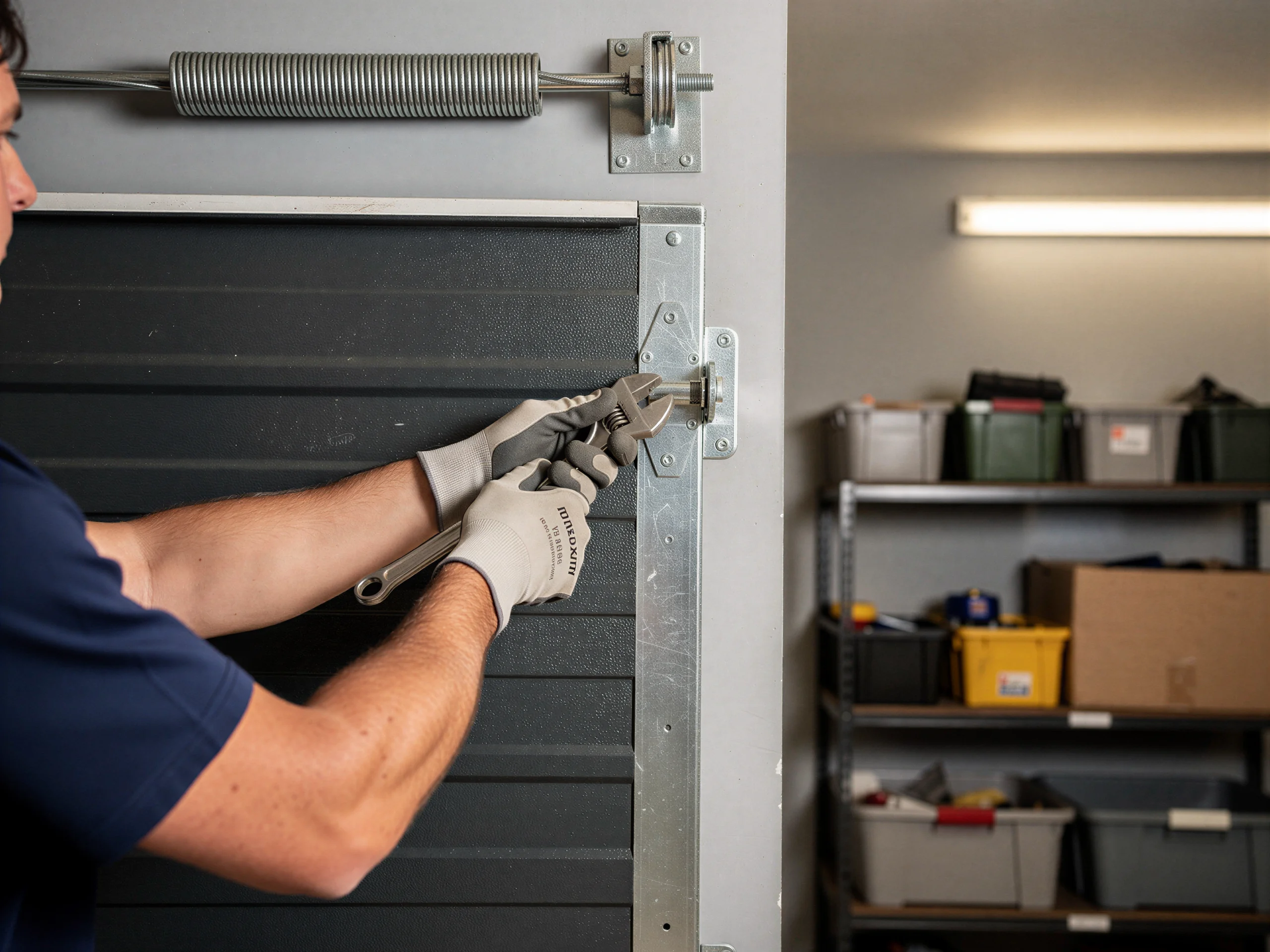
A torsion spring under tension on a modern insulated steel door is not a safer DIY job just because the house is newer - if anything the doors built in this era are heavier, with foam cores and sometimes glass, so the spring is carrying more weight and the wound tension is higher. We'd rather you call for that one.
What's reasonable to handle yourself: lubricating hinges and tracks, tightening loose bolts on the track brackets, and testing the auto-reverse safety sensors by breaking the beam with your foot. Those don't involve stored spring energy and won't put you in the ER.
The honest limitation: if your opener's logic board is the specific point of failure, we usually recommend replacing the opener outright rather than chasing a board repair, since parts for a unit that old are getting harder to source and the labor to diagnose a flaky board can cost more than a new unit. We'll tell you which way the math runs once we're looking at the actual unit, not before.
Questions
Holly Springs sits in a cold-moderate climate band, and grease inside an aging opener gearbox stiffens up in a cold morning. Combined with a torsion spring that's already near the end of its cycle life on a mid-2000s build, that stiffness is often what finally makes the fault show itself, even though the underlying wear had been building for a while.
Not really - age of the house doesn't protect the spring. A standard torsion spring is rated for a cycle count, not a calendar year, and a door opened twice a day for fifteen-plus years is getting close to the end of that count regardless of when the house itself was framed.
It's about 19 miles from our Johns Creek location. We don't keep a branch in Holly Springs, so we stage the parts we expect to need before heading out, but the drive does mean we plan the visit rather than treat it as a same-hour drop-in.
We carry the standard springs, rollers, cables, and opener components that cover most of what fails on a mid-2000s build. Custom insulated panels or full-view glass sections are often special-order, and we'll say so on site rather than promise a same-visit swap we can't deliver.
Explore more
Ready when you are
Johns Creek Garage Door Pros repairs and installs garage doors, springs and openers in Johns Creek, GA and the surrounding area.